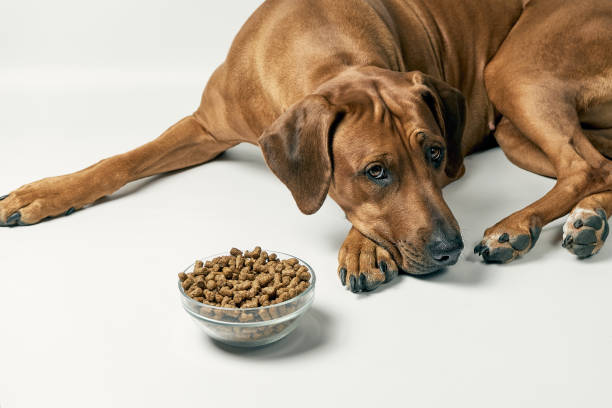
If you’re managing a dog with copper-associated hepatopathy, you’ve probably heard—or said—some version of this: “My dog hates the prescription food.” It’s one of the most common struggles in our community, Canine Copper-Associated Hepatopathy – An Evidence Based Approach, and it’s also one of the most misunderstood. What looks like stubborn refusal or “pickiness” is often a complex mix of behavioural, physiological, and medical factors that deserve careful attention, not just another bag swap.
When my Old English Sheepdog Riggs was diagnosed with copper storage disease, we left the clinic with several new prescriptions to fill—d‑penicillamine, ursodiol, and prednisone—a new prescription hepatic diet, and the internist’s final words: “Do this if you want him to live.” No transition plan. No guidance on when to give the meds for best bioavailability or whether they should be given with or without food. No discussion of what to expect. No mention of sacrificial diets or how to manage food refusal or side effects. I had to put down the new food, and when he wouldn’t eat, I was told, “You have to make him eat.” I stopped into the local vet clinic almost daily as I drove by, desperate, and was told, “I don’t know.” That experience is not unique—it’s the norm for many pet owners facing this disease.
The Problem: We’re Not Speaking the Same Language
When we say a dog “won’t eat” or “hates the food,” we’re collapsing several distinct phenomena into one frustrated statement. But the science of canine food behaviour tells us there are actually multiple pathways to food refusal, and they require different solutions.
Why These Liver Diets Are Not the Villain
In my group, this shows up as “my dog hates the only liver diets my vet will prescribe.” The reality is that the main veterinary hepatic diets for copper storage disease—Royal Canin Hepatic and Hill’s Prescription Diet l/d—are not random kibbles; they are gold‑standard, science‑based, copper‑restricted therapeutic diets that internal medicine and veterinary nutrition resources specifically recommend for copper‑associated hepatopathy. They are formulated to support liver function and to keep copper intake low enough to help prevent re‑accumulation in the liver over time, while still being complete and balanced for long‑term feeding.


The companies are confident enough in this that they put their money behind it: Royal Canin offers a palatability guarantee on its veterinary diets, meaning if your dog refuses the food, you can return it through participating vets or retailers for a full refund. Hill’s does the same with its Prescription Diet line, including l/d—a 100% satisfaction or your‑money‑back guarantee if your dog will not eat it or you’re not satisfied with the product. In other words, these diets are not failing because they are objectively inedible; when a copper dog “hates” a hepatic diet that has been engineered and guaranteed to be palatable, the real question is what else—nausea, medication side effects, learned refusal, or lack of transition—is happening around that bowl.


Food Neophobia: Fear of the New
Neophobia is the hesitation dogs show when presented with any novel food, regardless of how “good” that food might be. Research shows that dogs routinely eat more slowly, show distraction behaviours, and require multiple exposures before accepting a new diet—even highly palatable ones. This is normal canine behaviour, not a moral judgment on your therapeutic food. The problem is that many owners interpret this initial wariness as permanent rejection and switch foods before the dog has time to adapt.

Taste Preference and Avoidance Learning
Dogs are biologically wired to prefer calorie-dense, highly aromatic foods with higher fat content and lower fibre—which is exactly what most commercial kibbles are engineered to deliver. When a dog shows clear preference for one food over another, that’s taste preference, not pathology. The dog will eat when sufficiently motivated, but given a choice, will always pick the “yummier” option. This is where taste avoidance learning comes in: if the dog learns that refusing the therapeutic food results in something more palatable appearing, you’ve just trained avoidance behaviour.
Conditioned Food Aversion: The Nausea Connection
True conditioned food aversion is different. It occurs when a dog pairs a specific food with a noxious event—most commonly gastrointestinal malaise, nausea, or vomiting. Dogs with copper-associated hepatopathy can experience nausea from the disease itself (anorexia, vomiting, and weight loss are recognized clinical signs) or from chelation therapy. When a dog consistently refuses a particular food even when hungry, shows anxiety or stress around that food, or displays classic nausea signs—lip licking, drooling, repeated swallowing, turning away from all food—you may be dealing with true aversion, not simple preference.
This is a medical problem that requires veterinary intervention: anti-nausea medication, appetite stimulants, reassessment of chelation and other medication protocols, and sometimes a complete diet change under veterinary guidance. It is not something you fix by rotating through every available kibble until one “works.”

The Missing Piece: “Sacrificial” Diet Transitions
Here’s what no one in our community was taught: the concept of a “sacrificial” transition. A sacrificial diet is a temporary, intermediate food used to retrain behaviour and expectations before introducing the final therapeutic plan. It is deliberately chosen to be safer than the original diet (key: lower in copper, simpler formulation) but is not the end goal.
The purpose of a sacrificial diet is to break the “refuse and something better appears” pattern without creating a conditioned aversion to the actual prescription food. You use it for a controlled period—often a few weeks—on a structured feeding schedule with no alternatives, no toppers, and no buffet. Once the dog reliably eats the sacrificial diet, you transition gradually onto the true low-copper therapeutic food.
When I was managing Riggs, I didn’t know this strategy existed. I suspect most of you don’t, either. I only heard it clearly articulated years later in a continuing‑education webinar on food aversion and feeding sick pets. You won’t find “sacrificial diet” as a neat, named protocol in most textbooks or the literature; it’s a practical way of applying what we already know about food aversion, diet transitions, and feeding sick dogs. Instead, most of us hovered over the bowl, panicked when our dogs hesitated, and tried to fix it in the moment. Because we weren’t given this tool, many of us inadvertently did the opposite: we made the therapeutic diet itself the thing to be sacrificed. Every time our dogs balked, we switched foods or added toppers, which taught them that refusal works and prevented any single medical diet from succeeding long‑term.
What Copper Storage Disease Actually Does—and Why Diet Is a Cornerstone
Copper‑associated hepatopathy (copper storage disease) means copper is building up in the liver faster than the body can safely get rid of it. Over time, that excess copper damages liver cells, drives chronic hepatitis, and can progress to fibrosis and cirrhosis if it isn’t controlled. Chelation drugs can pull copper out of the liver, but if the diet keeps supplying more copper than the dog can handle, the liver simply reloads after chelation stops. That’s why long‑term copper‑restricted, complete and balanced nutrition is a cornerstone of treatment, not an optional extra—food is the daily lever you have to keep hepatic copper down over months and years. And prescription hepatic diets are not just “low copper”; they are formulated to support the liver as an organ, with adjusted protein, controlled fat, and added hepatoprotective nutrients and antioxidants to reduce liver workload and promote healing.
Why “Just Switch to [Brand Name]” Is Not Copper Management
This brings me to the pattern I see constantly in our community: the reflexive recommendation to switch diets whenever a dog shows reluctance. The most common version is “switch to [latest popular brand],” but the brand doesn’t matter—the problem is the advice itself.
When your only tool is “switch food,” you are not managing copper storage disease. You are changing labels on the bag.
Copper-associated hepatopathy is managed by controlling hepatic copper load over time with a correctly formulated low-copper diet, appropriate chelation when indicated, hepatoprotective and immune‑supportive therapies when warranted, and consistent feeding.
The primary goal of this disease is sustained reduction of hepatic copper, and a copper-restricted diet is meant to be fed long-term, not rotated casually. If an owner wants to use anything other than a formulated therapeutic diet, it must be designed with a veterinary nutritionist to maintain balance and appropriate copper restriction.
Constantly rotating diets undermines sacrificial transitions, reinforces pickiness, and risks putting the dog back on higher-copper formulas that quietly reload the liver. By encouraging owners to abandon a therapeutic diet every time the dog hesitates, you have effectively taken a potentially effective medical diet and rendered it behaviourally ineffective.
Preference ≠ Safety
Here is the hard truth that every copper dog owner needs to hear: what your dog prefers is not the same as what is medically safe.
Dogs naturally favour higher-fat, higher-calorie, more aromatic foods—exactly the profile that often comes with higher copper content and rich formulations. The liver does not care what tastes good. It cares what is fed consistently enough to prevent copper reaccumulation and progression to chronic hepatitis and cirrhosis.
If you let your dog self-select only “yummy” foods, you are running a home preference test, not a medical management plan. Palatability studies are designed to rank which food an animal eats more of—not which food protects its liver.
What We Actually Need to Do
So what does responsible food management look like for a dog with copper storage disease?
First, work out what you’re actually seeing. Is this neophobia (normal hesitation with a new food that improves over days)? Simple taste preference or avoidance (the dog will eat when sufficiently motivated, but prefers alternatives)? Or true conditioned food aversion paired with nausea, where the dog shows distress, refusal regardless of hunger, and clinical signs of GI malaise?
If it’s neophobia or taste preference, you address it with structure: a proper sacrificial transition if needed, controlled feeding schedules, no buffet of alternatives, and patience. Most dogs adapt to new diets within days to weeks when the behavioural environment supports it.
If it’s nausea or true aversion, you go back to your veterinarian for medical support: anti-nausea protocols, appetite stimulants, reassessment of chelation/medication timing and dosing, and potentially a different therapeutic food chosen collaboratively with your vet.
And critically, stop making the therapeutic diet expendable. The goal is to find one appropriately copper-restricted, complete and balanced diet that your dog will eat consistently, and then stick with it long enough to see hepatic copper levels and liver enzymes drop.
Moving Forward
This disease is hard. It is isolating, frightening, and chronically underdiscussed in veterinary practice. Most of us were handed a prescription and a diet and told to figure out the rest on our own. But we can do better for each other—and for our dogs—by getting specific about what we’re actually dealing with when a dog “won’t eat.”
Not every food refusal is the same. Not every solution is another bag of kibble. And not every piece of advice that comes from a place of empathy is scientifically sound or medically appropriate.
If you are struggling with food refusal in your copper dog, start by asking the right questions:
- Is this behaviour, physiology, or true illness?
- Have I given this diet enough time and structure to succeed?
- Have I talked to my vet about nausea management and whether this is aversion versus preference?
- And have I been inadvertently training my dog to refuse therapeutic food by constantly offering alternatives?
The answers to those questions will get you—and your dog—much further than another brand recommendation ever could.
Synergistically Yours
Danielle & Sheepdog Riggs
forever in our hearts
Did you find this information helpful? Do you enjoy my content or learn something new? Consider showing your support by buying me a coffee.
Has your dog been affected by Canine Copper-Associated Hepatopathy? Please see our Members Page.
References
- Bartges, J., et al. (2023). Nutritional management of a dog with hepatic enzymopathy suspected to be secondary to copper‑associated hepatitis: A case report. Frontiers in Veterinary Science, 10, 1215447.
- Brinkmann, J., et al. (2024). Copper metabolism and its implications for canine nutrition. Translational Animal Science, 8(1), txad147.
- Churchill, J. A., & Lyn, S. (2025, December 4). Collaborative Care 4: Nourishing Bonds – How to Prevent and Address Food Aversions in Pets [Webinar]. Purina Institute, “Creating Collaborative Care Through Nutrition Conversations” series.
- Cornell University Riney Canine Health Center. (2025). Copper hepatopathy and dietary management. Retrieved 2025, from Cornell University website.
- Hand, M. S., Thatcher, C. D., Remillard, R. L., Roudebush, P., & Novotny, B. J. (Eds.). (2010). Small Animal Clinical Nutrition (5th ed.). Mark Morris Institute.
- Hoffmann, G., van den Ingh, T., Bode, P., et al. (2018). Hepatic copper concentrations in 546 dogs (1982–2015). Journal of Veterinary Internal Medicine, 32(6), 1943‑1955.
- Linder, D. E., & Freeman, L. M. (2025). Nutritional management of copper hepatopathy. Today’s Veterinary Practice, 15(2), 20–30.
- Mandigers, P. J. J., et al. (2009). Dietary management of hepatic copper accumulation in Labrador Retrievers. Journal of Veterinary Internal Medicine, 23(5), 957‑963.
- Merck Veterinary Manual. (2024). Nutrition in hepatic disease in small animals. In Hepatic Diseases of Small Animals. Merck & Co.
- National Research Council. (2006). Nutrient Requirements of Dogs and Cats. National Academies Press.
- Royal Canin. (2016). Hepatic – Caring for your dog with liver disease [Client handout]. Royal Canin Vet Practice Portal.
- Royal Canin. (2023). Canine Hepatic – Veterinary Diet product information. Royal Canin Canada.
- Royal Canin. (2024). Palatability guarantee – Terms and conditions. Royal Canin.
- Sato, T., Solano, M., & McDonough, S. P. (2015). Dietary management of Labrador Retrievers with subclinical hepatic copper accumulation. Journal of Veterinary Internal Medicine, 29(1), 236‑242.
- van den Ingh, T. S. G. A. M., et al. (1997). Chronic hepatitis: A retrospective study in 34 dogs. Journal of Veterinary Internal Medicine, 11(2), 65‑73.
- van den Ingh, T. S. G. A. M., et al. (2022). Correlation of hepatic copper levels, rhodanine scores and histological diagnosis in archived canine liver samples. Veterinary Sciences, 9(10), 528.
- WSAVA Global Nutrition Committee. (2011, updated). Global Nutrition Guidelines. World Small Animal Veterinary Association.
